Experience Clava Cairns: Walking Among Scotland’s Ancient Stones
Published on
06 August 2025
|
Written by
Laurie Knight
A Bronze Age Mystery in the Heart of the Highlands
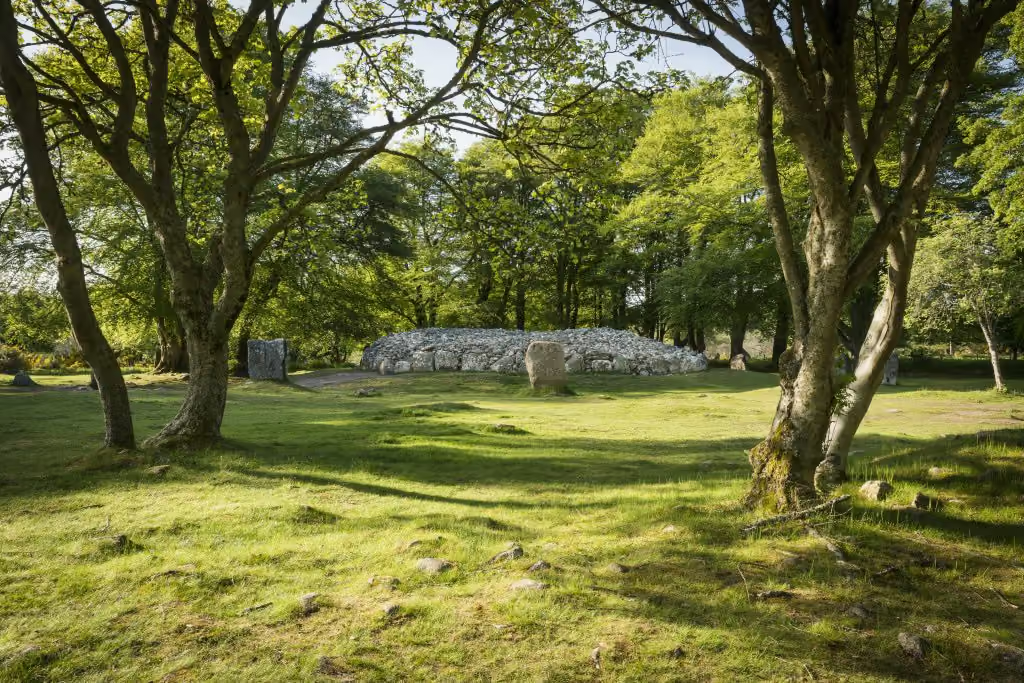
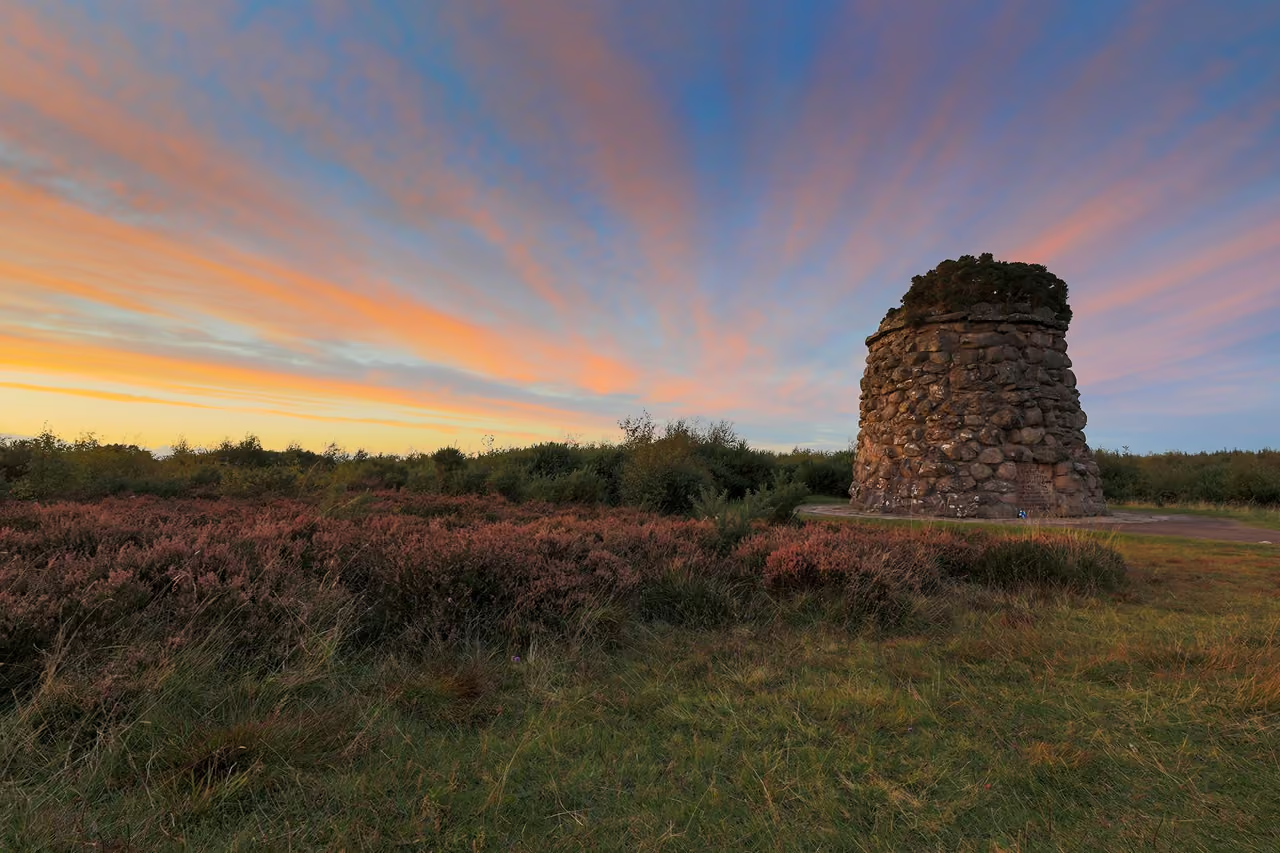
Clava Cairns or the Prehistoric Burial Cairns of Bulnuaran of Clava are a group of three Bronze Age cairns located near Inverness on Culloden MoorCredit: Visit Scotland / Kenny Lam
Just a short drive from Culloden Battlefield, the Clava Cairns offer one of the most atmospheric glimpses into Scotland’s prehistoric past. Dating back over 4,000 years, this remarkably well-preserved cemetery complex combines standing stones, passage graves, and ring cairns in a setting that still feels sacred today.
For visitors, it’s not just a history lesson — it’s a moment to stand exactly where people of the Bronze Age built monuments to honour their dead, mark the passing of the seasons and connect earth to sky.
History Written in Stone
Archaeologists believe the cairns were built around 2000 BCE, during the late Bronze Age. They form part of a wider tradition of prehistoric burial monuments found across Scotland and northern Europe, but the Clava Cairns are particularly noted for their extraordinary alignment with the midwinter solstice.
On the shortest day of the year, the setting sun aligns perfectly with the passageways of certain cairns, flooding them with light. This alignment suggests that the builders had a deep understanding of astronomy and that midwinter held great spiritual or cultural significance.
The site is divided into two main sections: the Balnuaran of Clava, which contains three large cairns, and a smaller group a short distance away. Excavations have revealed fragments of pottery, stone tools, and evidence of cremations — precious clues to the people who lived and died here.
Exploring the Site
Prehistoric Burial Cairns of Bulnuaran of Clava or Clava Cairns Credit: VisitScotland / Kenny Lam
Walking among the cairns today, you’ll notice each one is encircled by a ring of standing stones. The largest, Central Cairn, has an entrance passageway leading into a circular chamber. The two passage graves at Balnuaran face southwest towards the winter sunset, while the third cairn is of a ring type, with no internal chamber.
Even without a guide, it’s easy to appreciate the planning and precision that went into the construction. Each stone was carefully selected and placed, and the symmetry is still clear after four millennia. There’s no visitor centre here — just the quiet presence of the stones, the rustle of trees, and the chance to explore at your own pace.
Sign up to our newsletter
Thank you! Your submission has been received!
Oops! Something went wrong while submitting the form.
Clava Cairns and Outlander
For fans of the “Outlander” series, the Clava Cairns will feel strangely familiar. While the fictional Craigh na Dun stone circle was created for television, it was inspired by sites like Clava Cairns. This connection has brought new visitors to the site in recent years, drawn by the mix of romance, history, and mystery that defines so much of the Highlands.
Most travellers visit Clava Cairns as part of a wider journey through Inverness and the Highlands. Its proximity to Culloden Battlefield makes it an ideal second stop — a place to contrast the prehistoric with the historic. You can experience both on our Culloden and Loch Ness Day Tour, where the day flows from Jacobite history into the ancient landscapes of Bronze Age Scotland.
For those designing their own perfect Highland itinerary, Clava Cairns can also be included in custom tours, giving you the flexibility to combine it with other historic, scenic, or cultural highlights.
Visitor Tips
Best time to visit: Early morning or late afternoon for soft light and fewer visitors. If you’re in the area in late December, the winter solstice alignment is unforgettable.
Accessibility: The ground is mostly flat with grassy paths, but surfaces can be uneven in places.
No facilities on site: The nearest amenities are in Inverness, about 15 minutes away by car.
It’s rare to find a site where you can stand among stones placed by human hands four thousand years ago and still feel their intended purpose. Whether you’re fascinated by archaeology, intrigued by ancient astronomy, or simply looking for a moment of quiet reflection in the Highlands, the Clava Cairns deliver something deeply memorable.
They may not answer all of our questions about the people who built them — but perhaps that’s part of their enduring appeal. The mystery remains, inviting each visitor to imagine the ceremonies, the lives, and the beliefs of Scotland’s distant ancestors.
Include Clava Cairns in Your Highland Journey
From Bronze Age tombs to Jacobite battlefields, the Highlands are rich with history at every turn. Adding Clava Cairns to your itinerary is more than just ticking off another landmark — it’s stepping into a story that began thousands of years before Culloden, and will continue to inspire visitors for generations to come.